More Home
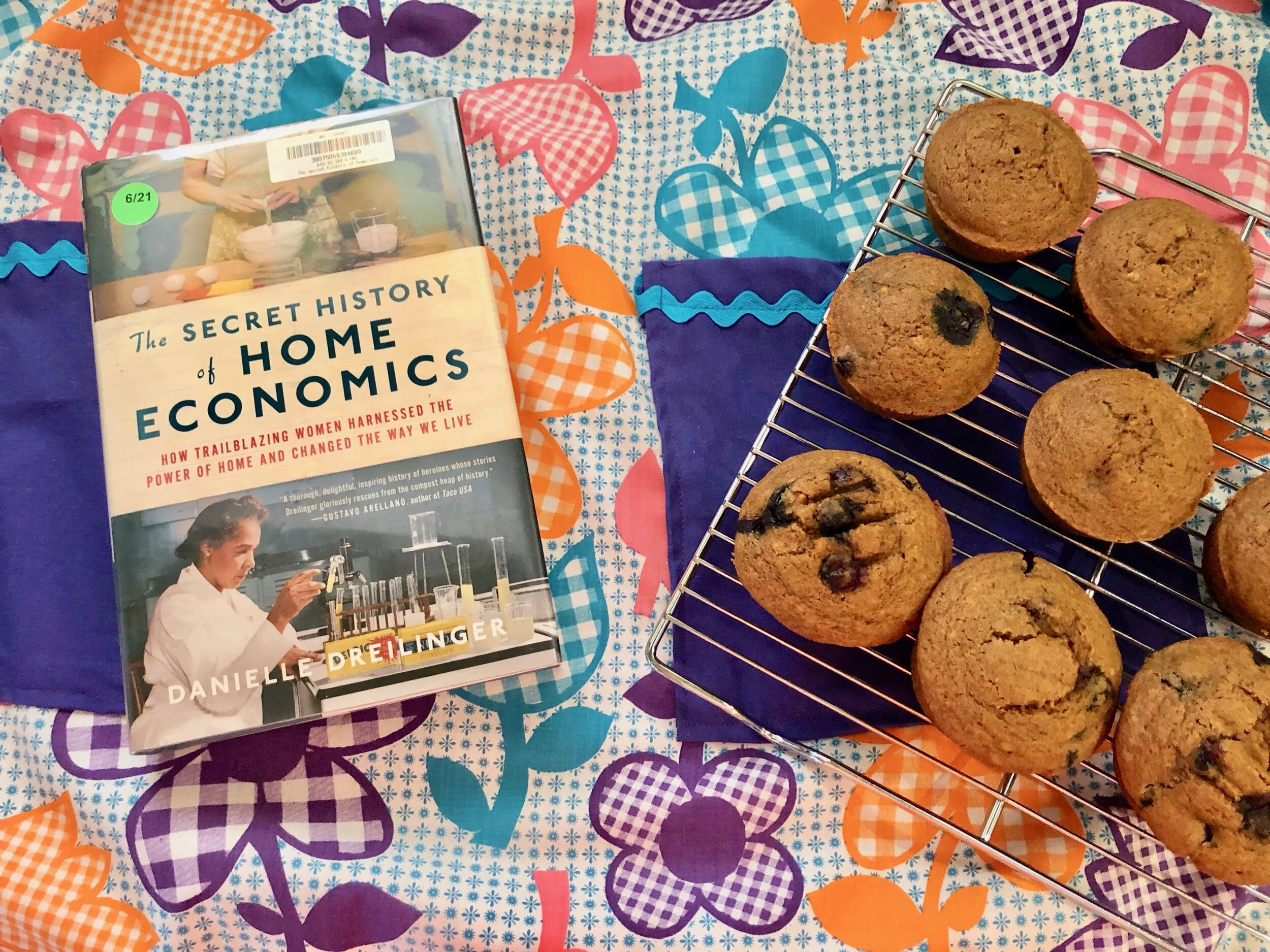
I have my doctorate in family studies and most people don’t know that it’s actually an outgrowth of what was home economics. We tend to think of home economics as a sewing or foods class we took in junior high/high school.
What we don’t think about is the history of home economics– the reasons it began, where world events took it, and where it landed today. That was in the book in the photo- The Secret History of Home Economics.
There are a lot of things I could say about the book– it was very well researched– but for me, it’s really about the continued reminder of the importance of home. And as technology advanced to make doing household chores less cumbersome (to some extent– I still don’t like emptying the dishwasher and folding laundry) and more women joined the workforce, it ultimately morphed into family studies, looking at how we can make families stronger.
For me though, I find the history interesting because I believe home is important. As I reflect back on my own experience with my mom, I see how hard she worked to create as much of a happy home for us (despite all efforts by my dad to squash it with his own unhappiness that kept him drinking). And as I’ve gone to so many estate sales, now realizing I’ve been going to them for almost twenty-five years, I also see that my mom was just like the other moms out there.
They kept the recipe booklets that came from the gas company or they mailed away to Jello for. There was often a stack of towels or sheets in the linen closet to be saved for special occasions that in their eyes never came along and thus were never used. There were bright patterns on the dish towels and the pot holders/hot pads in the kitchen for when they tired of making meals for their family, usually an ungrateful group who didn’t understand what a chore constant dinner creation could be.
While the book delves much deeper than this and while my doctorate isn’t related to cooking and housekeeping in any way, I can only think that because my mom worked so hard on our home, and because my friend Bonnie, who grew up in an “oil patch” family and then married an “oil patch” man, taught me that you need to sow your seeds no matter where you are planted, I’m aware of the importance of making our dwelling as much a happy and comfortable place as we can.
Home is where I work, making my home better is what inspires me, and the history of home– while not always pleasant when one reflects on the racism and sexism– is necessary to acknowledge as we continue to take it forward. It’s still about strengthening family units, however those might be defined (two humans and two dogs at my house). It’s ultimately about how we make our lives better, lessons not always taught in this present world we live in.
Peace in the Continued Sort of Chaos

While things are much calmer than they were a year ago, we are still processing much change around us. And the grief of the life and ways that are no longer part of our routines. There have been many losses, not just deaths, but in the way we do things and, for some people, the loss of relationships with people who have chosen different routes.
We don’t grieve overnight, get up the next morning, and forget what once was. Grief is a process and it’s a journey. Some people are afraid to venture out after so much time alone or without having the responsibility to leave home. Other people are still afraid of what virus lurks among us.
We have all lost something, many things. While not to the virus, I’ve had quite a few deaths of people in the outside orbit of my life. My sense of time has changed in a way I can’t explain– for some reason it feels like the days are spinning faster. I even said to Greg yesterday, “How did an hour go by?” when I realized the tomatillos I was roasting in the oven had been in there an hour already.
But we all also have had the opportunity to find peace within ourselves. Our days are never perfect commercials on television where everyone is happy and having a great time. There is alway a bumble, a hiccup, and usually a person causing havoc.
One thing we should be taking away from this pandemic experience is how to find peace inside ourselves. Have you done that? We can’t control the outside world but we can control our reactions to it. Some people remain reactive to it, others have learned to step away from the world (or just their phone which in many ways can be one in the same).
I’m finding I don’t want to be on my phone, not because of the chaos of the world, but because it keeps me from being more creative. I want to write, to sew, to paint, to draw. I don’t need to keep looking things up, checking the newsfeed. It all will be there later when I’m ready to share what I’ve created.
This morning there was a road runner on my front porch ledge, definitely a reminder of the peaceful pace as he stood and looked around, not in a hurry to go anywhere. Instead, he stood and surveyed the scene as if to stop and smell the roses.
National Mental Health Month
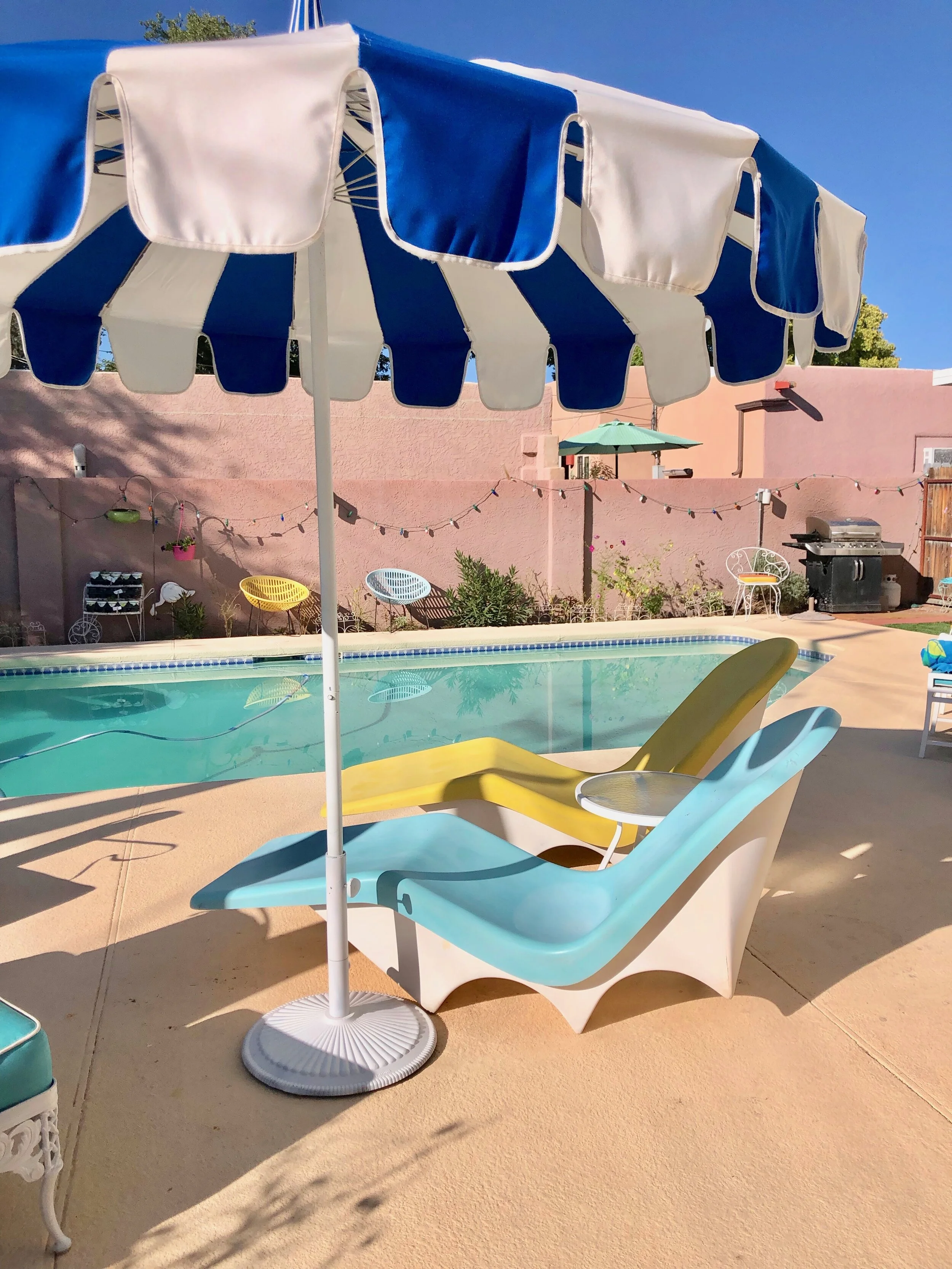
As summer has transitioned to fall, I can see the light changing. The days grow shorter, but with all that hot weather behind us (and hopefully all the fires, too), the air and sky are crisp again here in the desert Southwest.
This month our focus is on mental health, a topic that has gotten much more awareness since the pandemic began. It’s boggling why we haven’t given it much attention before– while I believe in holistic health (mental/emotional, spiritual, and physical), making sure our minds are in a good place is key to accomplishing so much. And that includes guiding us into healthy relationships (and maintaining them).
While we always should have some focus on our mental health, this month I’m asking you to take a closer look at what helps keep you mentally healthy. Maybe you don’t know, maybe you know you need to work on your mental health but you don’t know how or what to do. Acknowledging work to do is the first step. After all, we all should take the time to reevaluating taking care of ourselves. Sometimes we need to make tweaks but we don’t do it because we think it’s easier to keep rolling along in our comfort zone.
I was fortunate to be made aware early of mental health because of my competitive running career, working with a sports psychologist. My interest in mental wellness predates my sister’s suicide by quite a few years.
My challenge to you for this month is to think about the things that help you feel mentally healthy. And if you feel your mental health needs work, create a series of steps to make changes. We are all works in progress and there is nothing wrong with stepping back and revisiting how you take care of your mental wellness.
And there is no better time to do it.
Saying Goodbye to AAS
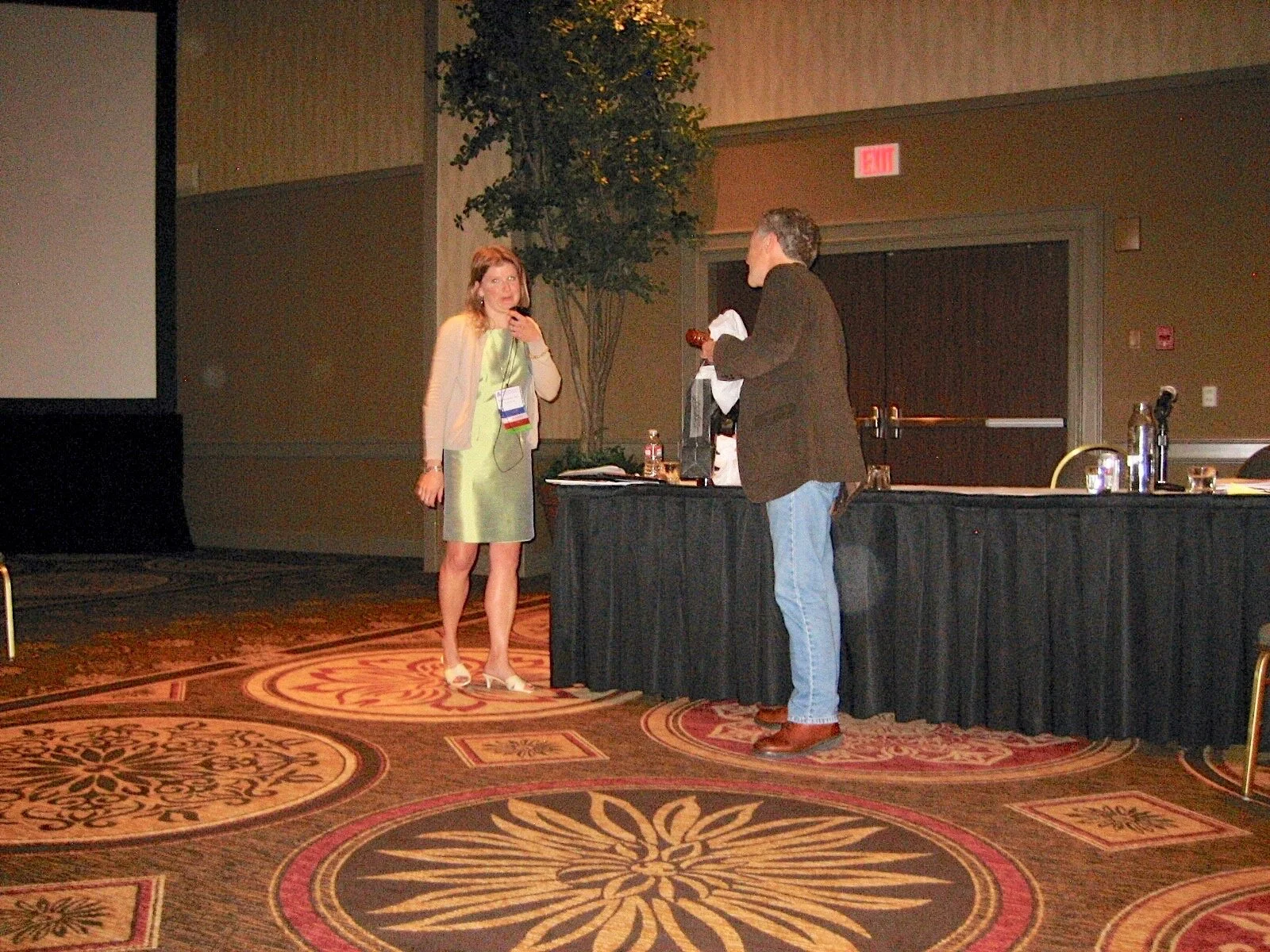
I know this isn’t a great photo, there are other better photos of Jim Rogers and I, but in this one he’s handing the gavel to me, the handing of the presidential leadership from one president to another. It was one of the most significant and meaningful events in my life, becoming president of the American Association of Suicidology nearly ten years ago.
I have put off writing about this because I didn’t want it to interfere with any messages this month regarding National Suicide Prevention Month. And I waited to see how things would roll out, but I know now that I have severed my last ties with the organization that brought me so much, that gave me a new family, that connected me with people around the world, and was my professional home even before my first book was published. In fact, AAS led me to the publisher of my first book about sibling suicide grief.
But a leadership grab that quite honestly makes no sense to me has forced me to cut that final string and shut the door.
Most people will say that I severed ties a long time ago because I tried to walk away from the work. What many people don’t realize is that since my sister died, my parents have died also and it changed the “place” of my sister Denise’s death in my life. I felt it was time for me to do other things.
And there was something else– when I went back to a conference, this particular one in Phoenix several years ago, I was dismayed by what I saw. This was not the professional organization that I had joined back in 1999, a group of people who made me want to do better, to be better. Instead, I saw bashing of people and a lack of respect from one particular group to another. The leadership that had gotten us where we were was gone because the people who came in chose to blatantly disrespect others. And then the bylaws.
I didn’t tell many people what I saw; I thought maybe it was just me. But it turns out, what I saw was the beginning of the end and where we have landed today.
I grieved the loss of AAS then and I grieved it again in August. I would not be who I am or where I am without AAS. I’m glad I walked away when I did, that I chose wisely not to rejoin several years ago and watch the demise from a closer seat than I needed to sit.
I don’t like it; part of me is angry, knowing the work of so many that is gone. But I do understand that change happens and somewhere in this I’ll find my way forward. Like I always have.
And I hope everyone else does, too.
The Tribute to My Sister
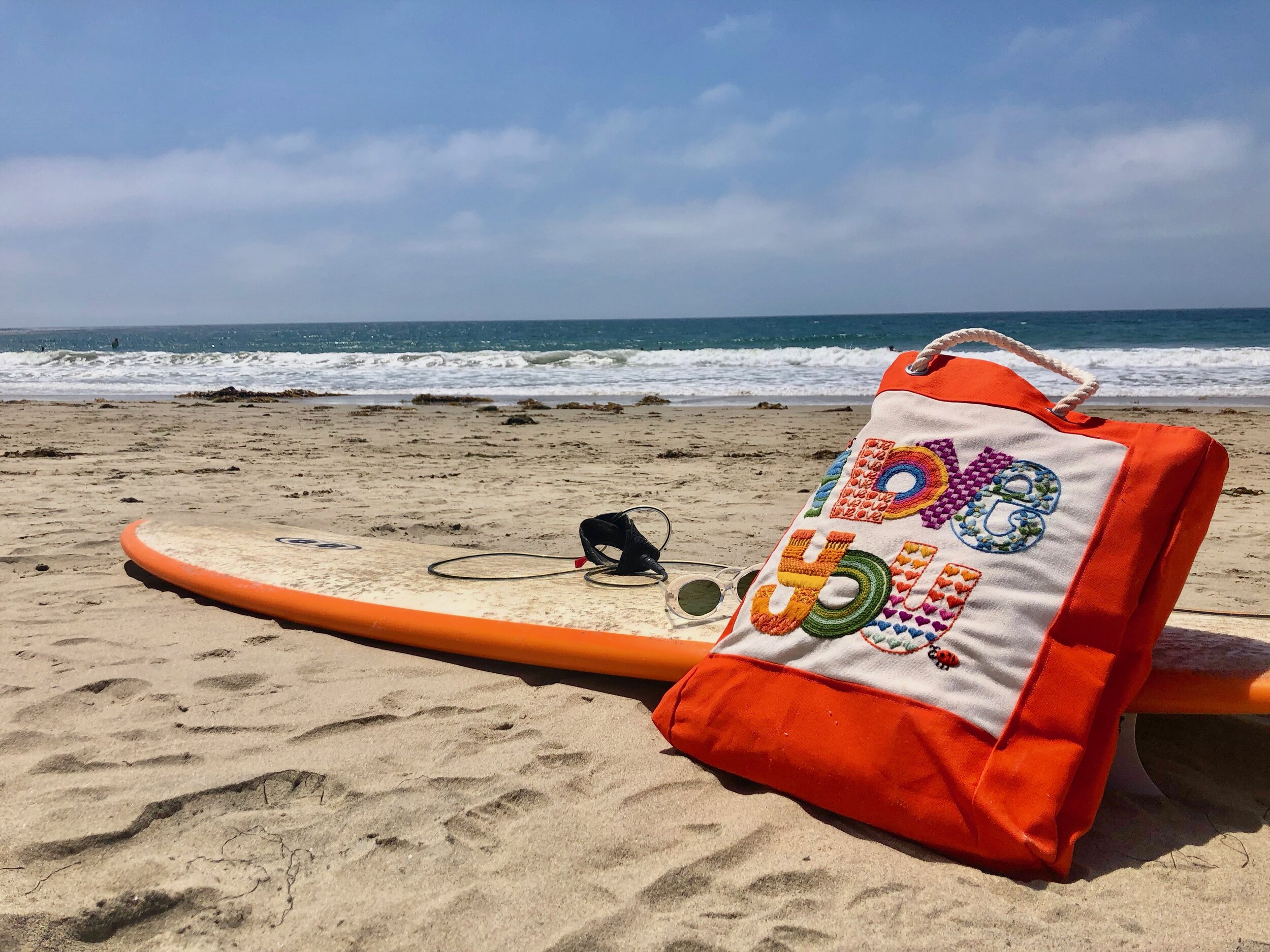
After the event at church Wednesday night for those whose lives have been touched by suicide, a woman placed her circle on the tree and then caught me before I left the church. She told me she had lost her sister to suicide and wanted me to sign her copy of my book, Do They Have Bad Days in Heaven? Surviving the Suicide Loss of a Sibling. The cover was bent back, proof she had read the book, and before we parted, she told me how she tried to pay tribute with her husband to her sister each year. Then she asked me if I pay tribute to Denise.
I’m not sure why, but the question caught me off guard and I didn’t know how to answer. Finally, I said, the book, and pointed to it. She nodded and we parted. But I realized later that the book is not paying tribute to the life I had with Denise. The book is about her suicide, about moving forward and, to me, paying tribute would be about remembering the life Denise had, not her suicide. And the life I had with Denise.
My tribute to Denise is all of this– what I create, what write, everything you see on this web site. It’s a tribute to the childhood we shared, the creativity we explored together through coloring and making clothes for our Barbies on our grandmother’s old Singer sewing machine. It’s the inspiration I find in my daily life.
That’s my tribute to Denise.
Home
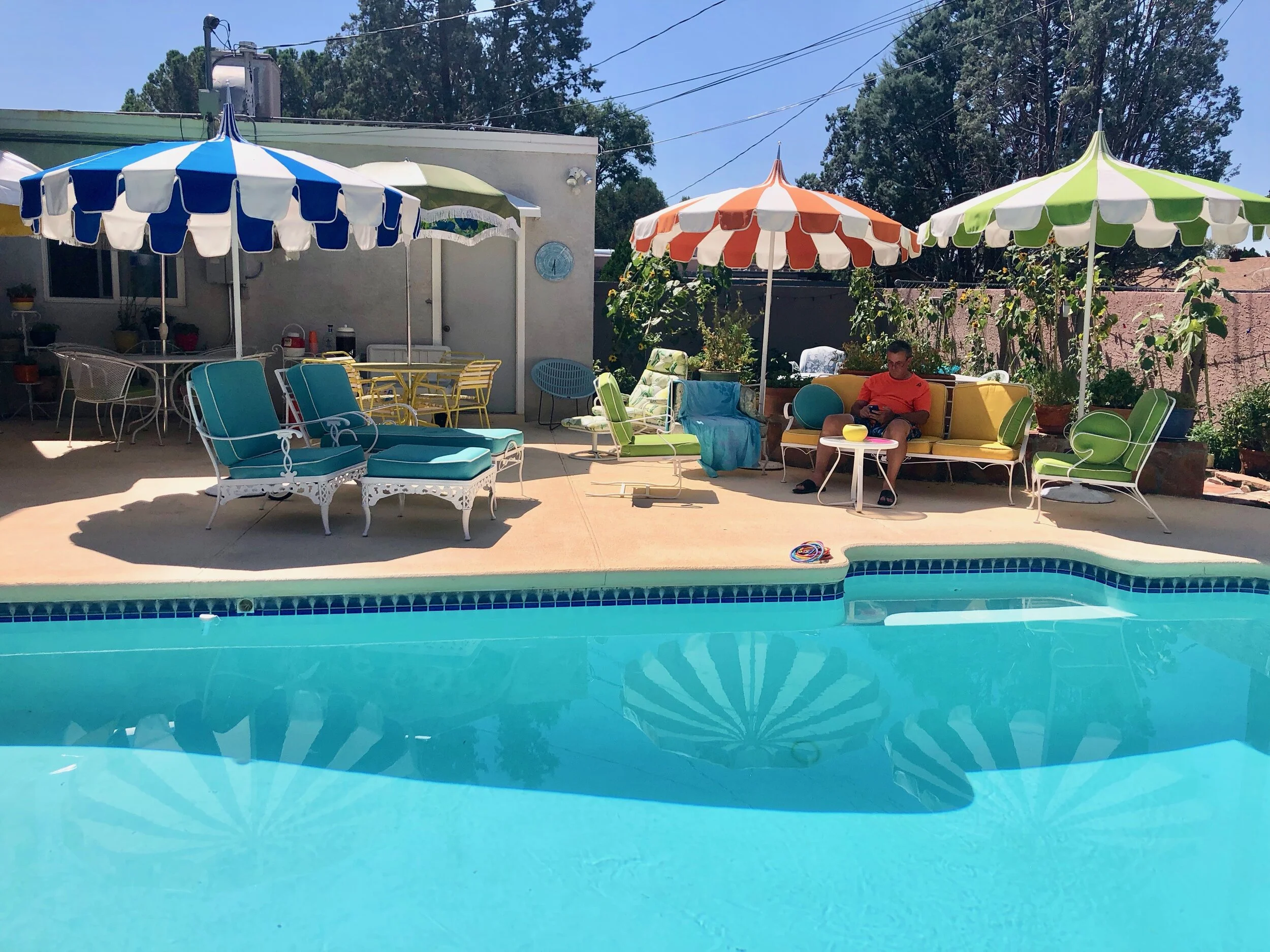
I don’t believe I can ever write enough about the importance of home because I don’t believe many people understand how important home is related to who we are/who we become. And the choices we have about making home a place that makes us happy.
While I understand that life isn’t about physical objects so much as it is about what happens inside our minds, nourishing all sides of ourselves, home is our shelter, our rest, our inspiration. Home is a place where we live the routine moments of life that make up more than the big events.
Someone taught me long ago that you sow your seeds where you are planted, that no matter where you are, you make the most of it. Her words have always echoed in the back of my mind, even when life wasn’t what I wanted or that I wasn’t really where I wanted to be. Still, it was important to take care of home.
And it’s why I spend the time making changes, updates, surrounding myself with what makes me happy. I love to explore the world, but I also love to come home and just be.
Watching the pandemic play out, I saw many people who realized that home wasn’t necessarily what they wanted it to be so they made changes. Others chose not to. To me, it was an opportunity to make home better because that bodes well for the future, especially for the others who share that home with you. It might not be obvious, but you’re giving something to them, too– a piece of yourself.
The Ripples from Suicide
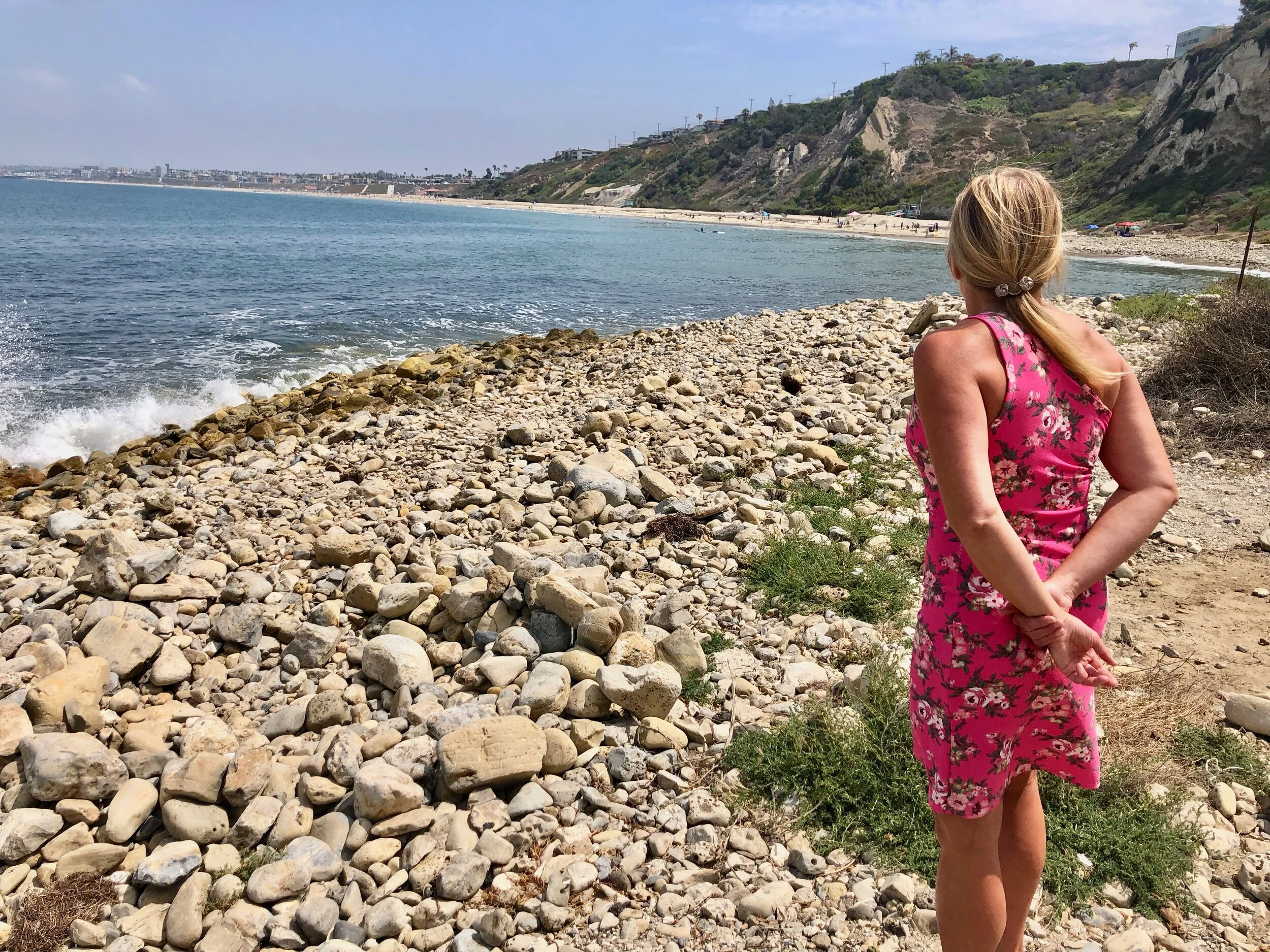
On the even of National Suicide Prevention Month, I am reminded of the stories I have told through the years since my sister Denise’s suicide, the stories that show how deep the ripples of suicide run. Many times I have not named the people whose stories I am telling to protect the privacy of their grief reactions to my sister’s death, or to another way that suicide had touched their lives. I believe it’s important to let people tell their own stories– if they choose to.
But last week a high school teacher of mine, Mr. Foerch (his first name was Brad but he was always “Mr. Foerch” to me) died. He was 62, not an age at which we expect anyone to die.
I’d had Mr. Foerch for consumer education and economics, but I also had been a sports writer and the sports editor of the school newspaper so I had gotten to know him some time before I had him as a teacher because he was the gymnastics coach. But in the spring of 1993 when she died, my sister Denise was a student of his in his consumer education class, the last class she needed to graduate, all her other requirements having been completed.
At her wake, another teacher, who I have known much longer, told me that Mr. Foerch had been gone from school, that he was taking the day of her funeral off (it was the following morning) and that he wasn’t doing well.
There was nothing I could do at the time, however, at some point I wrote him a letter. The response took a very long time and it was only then that I learned the depth of his grief over Denise’s suicide.
A girlfriend had found my letter to him and asked him if he had responded. When he said no, she had questioned him why not, telling him that he needed to.
It was in that letter that he told me how much pain her death had brought him– how he thought Denise was too smart for her own good how he didn’t want to face the classroom (where she had walked in my steps and become another current events queen). without her.
I have the letter– it’s packed away somewhere. I don’t know how many times I saw Mr. Foerch after Denise’s death– I know the last time was around 2008 when I was there at the high school with a friend who was having his class reunion. We didn’t talk long; he didn’t really have time between classes.
But when you move on from the people in your life, you wish them well, you hope that life has brought them happiness. And you hope the grief they might have experienced has been processed. I hope that for Mr. Foerch and that perhaps he and Denise will get to meet in heaven for coffee. Her pain from this life is gone, any pain over her suicide that he had, is also gone. Maybe they can pick up where they left off before she died.
Be Present
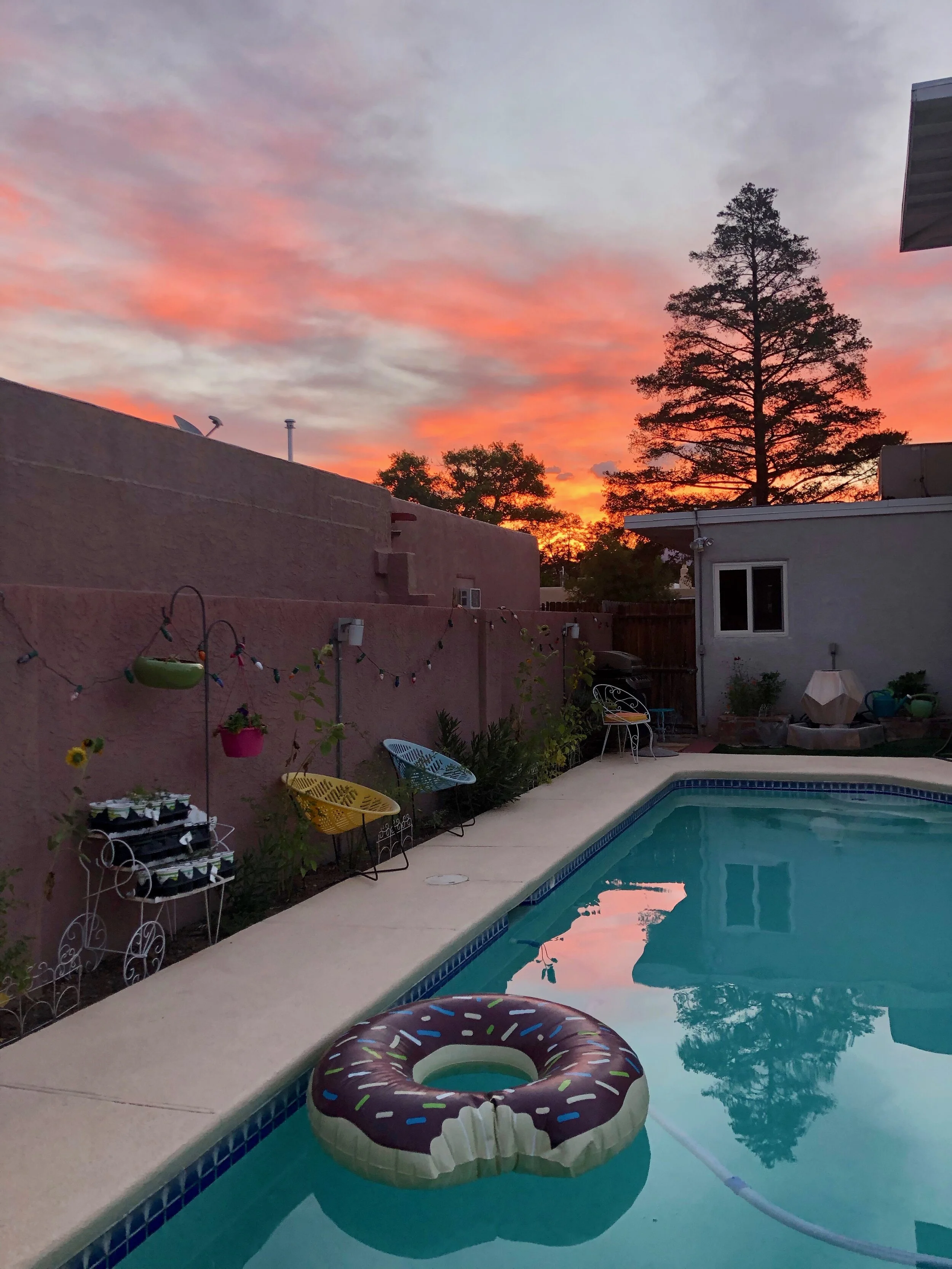
Be present.
Seems impossible for many of us, doesn’t it?
How often do we find ourselves distracted from the moment, even a great one, by something else?
But being present is important, it’s a key to life in many ways, or at least to functioning in life. What we often don’t realize, however, is that not being present is the source of much of our pain. We’re always looking one way or another– in the rearview mirror at what we had– or looking forward to what we want but can’t seem to get. Then we find ourselves in a downward spiral of pain.
There is pain in the present, of course, but present moments don’t last forever. The sun always has to come up, light must return.
Whether we have lost someone to suicide and can’t stop looking back at what we didn’t do or what we will never have, or we’re contemplating ending our lives because we can’t bear to face a future, we need to stop walking one way or the other.
Stand still, be present, look around. What’s surrounding you? Life has pain, it’s a reality, Yet by stopping for a moment and just being, we’ll find our perspective changes. By being present.
That Stupid Word
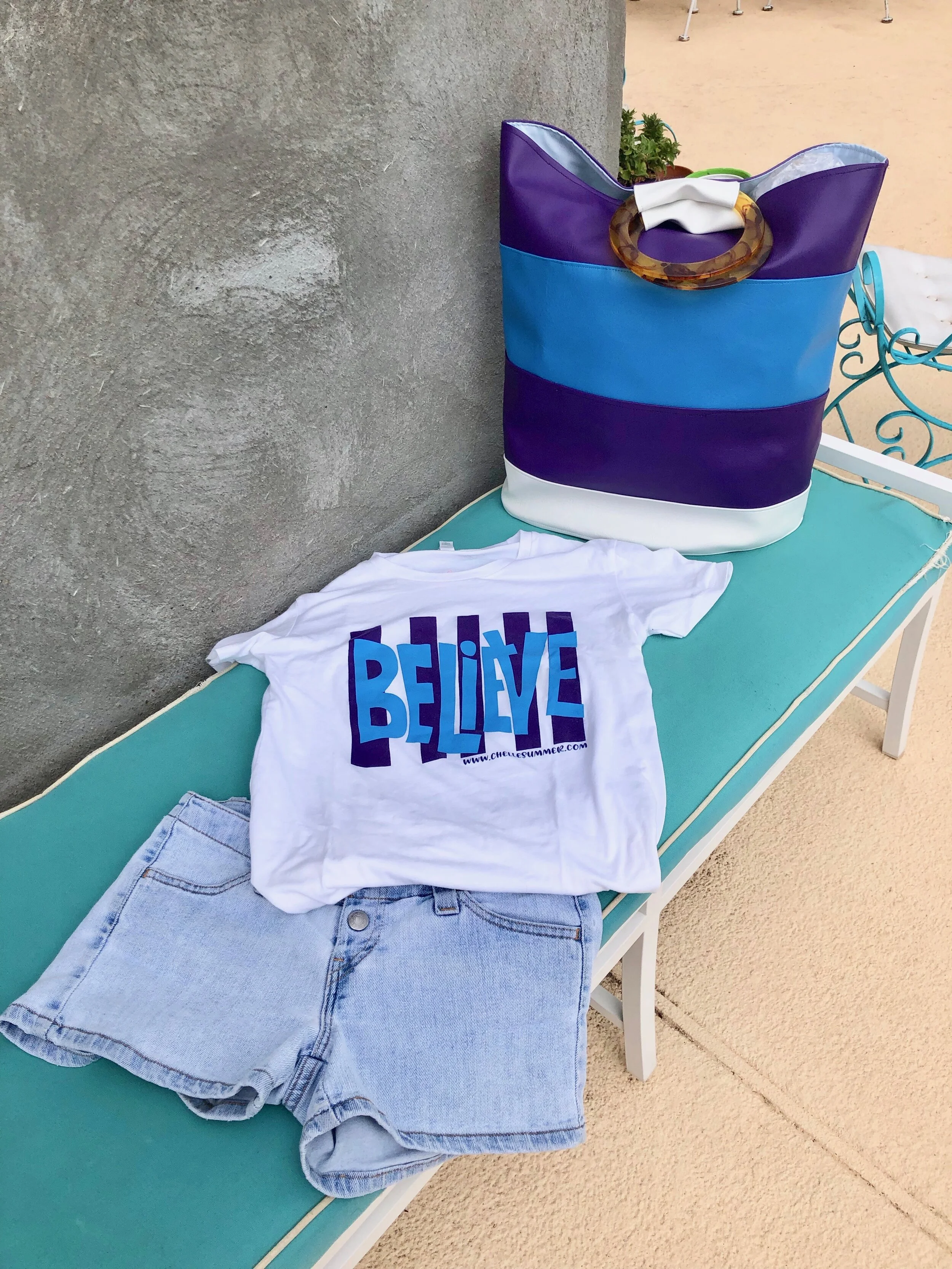
No no no– I’m not referring to believe. We all know I like that word so much that I made t-shirts and stickers from my painting of it.
We’re two weeks from Suicide Prevention Month, Suicide Prevention Week, and Suicide Prevention Day which means it’s time for me to start addressing not just suicide, but the state of where things are. I dusted my soap box off and I’ll be using it for the next few weeks.
Usually, each time this year I have some sort of message that I believe people should know about. This year, probably in light of everything that’s happened, I didn’t feel anything that hasn’t been said before so much as maybe some things that need to be rehashed.
I also thought about something that is getting better, but still needs more work.
The used of the word “committed.”
That’s the stupid word.
I never felt comfortable using that after Denise died by suicide. It never rolled off my tongue and it took me time, processing, to understand that “committed” in that sense means sin or crime, neither of which she had done.
Denise died by suicide. She believed her pain to be insurmountable and I have never tried to judge that because I wasn’t walking in her shoes.
For many reasons- church reasons, law reasons– the word committed has stung the bereaved in a negative way. The good news is that I hear it less often– less on television, less in the newspapers. The bad news is that I still hear it in my orbit.
There are many things you can do for suicide prevention and there are a number of things you can do for the bereaved. One big one is to change your language and those around you.
Died by suicide.
Sacred Spaces
I believe God is with me all the time; I can talk to God whenever I want. I try to be thankful for the small things– like excellent parking spaces– and ask for help when I’m writing an email or some sort of post, to bring me the words to share. I don’t need to be in a church to feel God.
But the pandemic taught me something about the importance of sacred spaces, like churches, in my life.
I remember once, my former CCD teacher whose son was my age, told me that her sacred space had become when she was riding her horse. I believe that stuck with me because it was the first time someone had said that to me (I was still fairly young– probably in high school if not younger when she told me that). Other people have said that to me throughout the years, but now that I’m older, I do believe you can be in different sacred spaces– to you– but there is no substitute for being in a church.
I didn’t realize it until Greg and I were several weeks into getting back to going to mass consistently each weekend again. Then I began to receive what I call “my messages” and that’s when I saw how important it is to take the time to go to church.
There is something to be said for taking an hour out of the day and going to a space where I am not bothered by the million things I want to do or the other interruptions in life. Of course my mind wanders at church, it wanders no matter where I am. Yet I am more able to hear God because I’m not distracted by so many other things.
I also had started putting in my prayer before mass to Our Lady of Guadalupe, asking her for my messages that I need to receive that day. In the past few weeks, I’ve noticed an uptick in them– ideas, thoughts, even questions for manuscripts I’m working on. Sure, these could come to me anytime, but there is more room you might say in my brain at the time of being in church because there are fewer distractions around me.
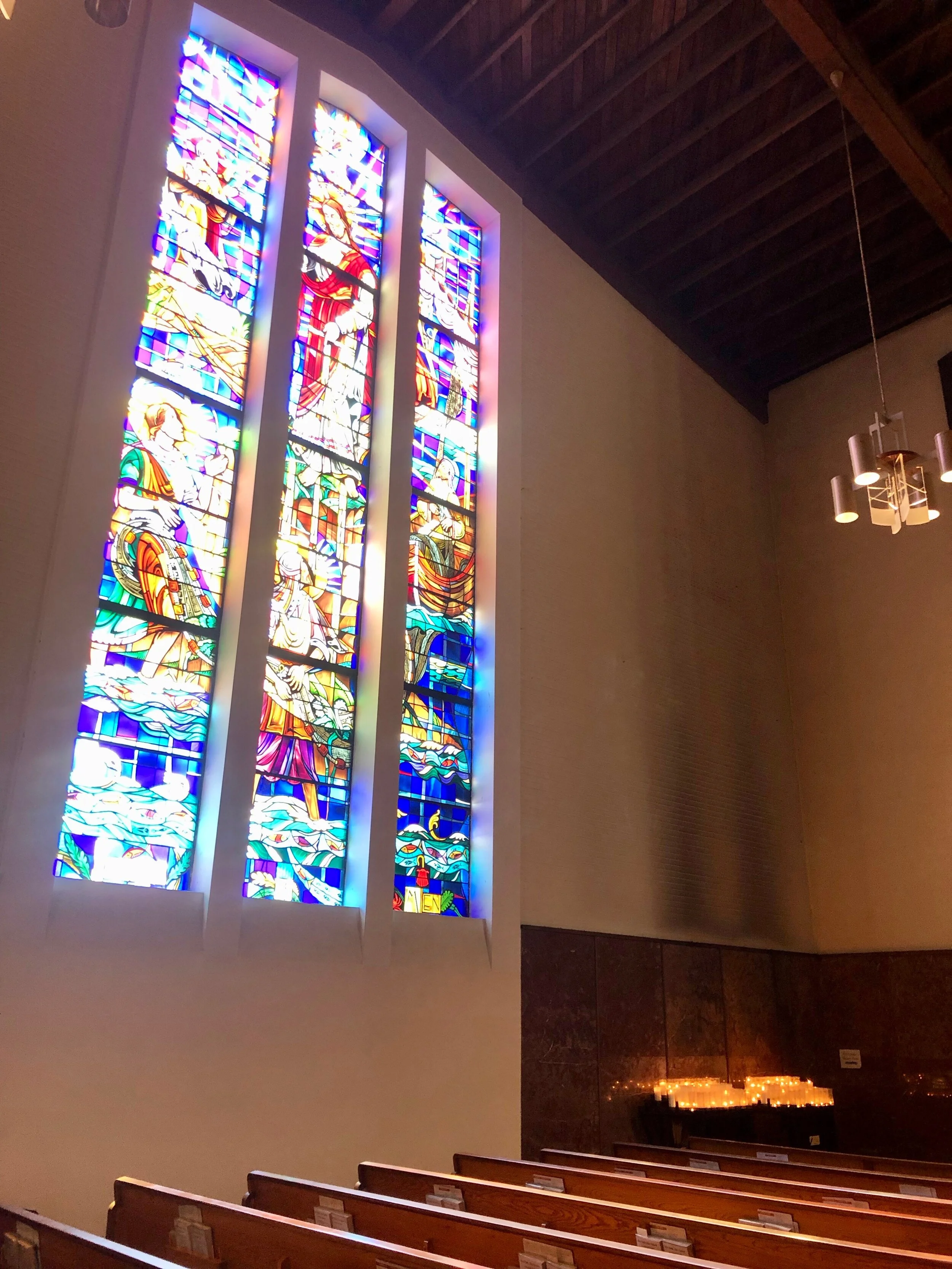
While most people don’t understand it, LA is a sacred space for me. I replenish my soul there, I get new ideas, I find inspiration to keep me going until the next trip. Even if we can’t make it to mass, we always stop at my favorite church, St. James in Redondo Beach, so I can light a candle. A photo never does this stained glass justice. But it’s about more than the photo– that church, that sacred space, has been a place where I have been more than thankful, but ask for the help on the road to where I’m heading next.
Both churches are important in who I am, in who I want to be, and finding the strength to not just stay the course, but to believe this path I’m on is going to get me where I want to go. And where I’m supposed to go.
The Discomfort on the Road to Success

As I made my breakfast smoothie this morning, I was streaming the Olympic coverage on Peacock (it was the end of the evening track and field session in Tokyo). David Feherty from The Golf Channel was talking about why he was never more successful playing golf. He explained that he understood that all successful people, in any field, are successful because they want to be uncomfortable. And he didn’t want to do that.
I believe this a concept that most people don’t understand– to be successful, you have to continually step out of your box and into uncharted territory. To lead a well-lived life, you need to do the same. You can’t sit back in your arm chair and watch life play out in front of you, it needs to be about your actions.
As a freshman in high school, I remember our cross country coach told us something similar. “To be a good distance runner, you will never be comfortable.” (The other bit of advice I remember from him was that we should never, ever get our shoes wet when we were running– I’m not sure which is harder– stepping out of a box or not stepping in puddles of rain when you don’t know how deep they are.)
Some years ago, I was in constant motion training people on the warning signs of suicide/how to ask people if they are suicidal. I had multiple contracts with various state and federal organizations, was working on a doctorate, and had a variety of other things happening. Each week, I was doing a presentation and I used to remark that I was constantly stepping out of my box, being forced out of my comfort zone.
It wasn’t easy but I could see, even then, how it was helping me to grow. The more I spoke, the better I got at it. And the more experiences I had that I could write about and reflect back on.
It’s okay to rest sometimes. We have to do that. Yet we also should remember that being comfortable for too long means we aren’t growing. That’s when we need to find something to challenge ourselves, something new, something that maybe we didn’t believe we could do before. That uncomfortable state means we’re heading in the right direction– we’re growing into who we all have the opportunity to be.
Drowning Out the Negative
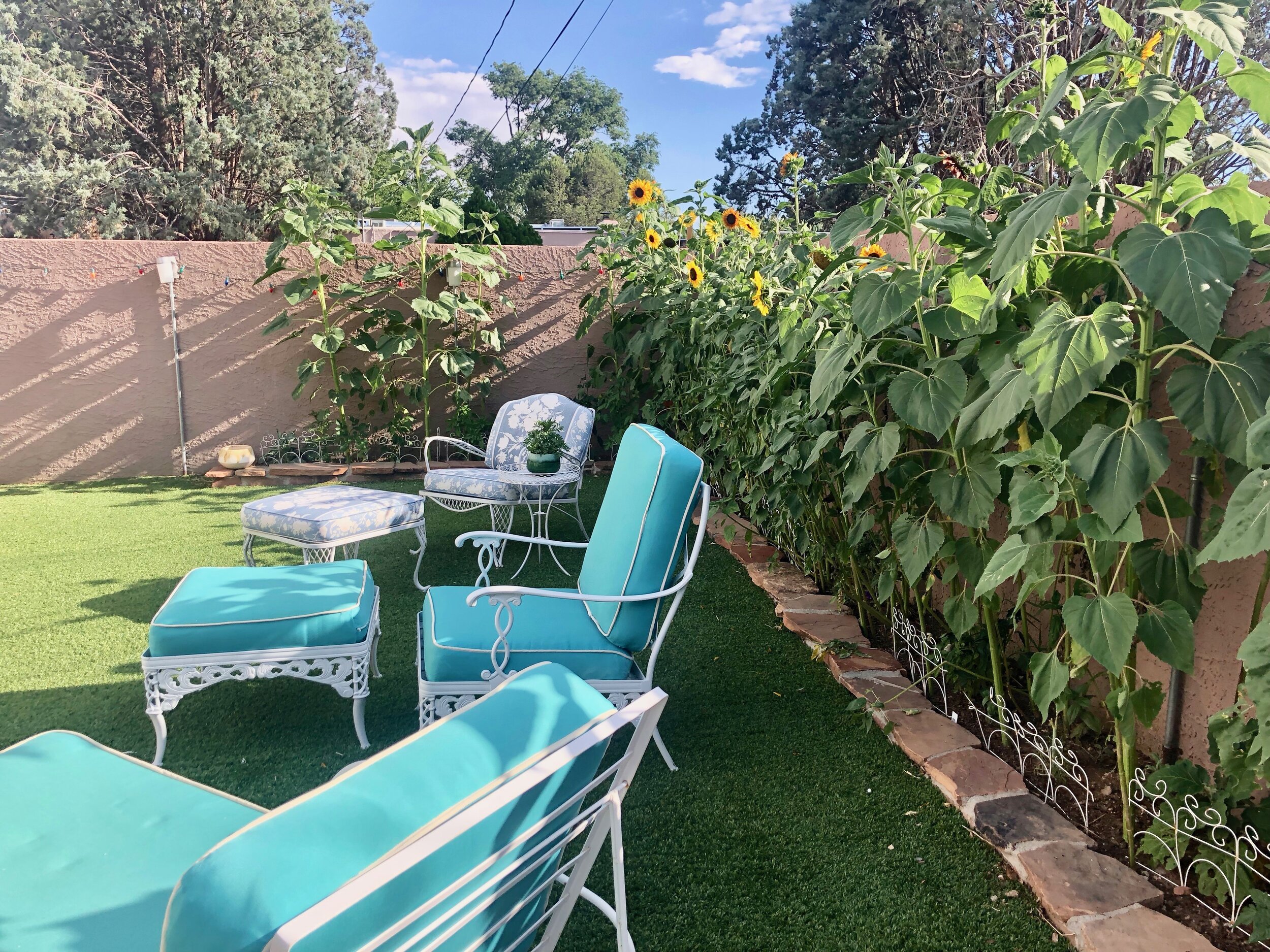
In many ways, I had thought the pandemic was the perfect time for people to latch onto what I do- sharing inspiration and hope. While many people posted their negative thoughts about what we were enduring, I held steady and kept posting my sunny, colorful photos.
I also thought it time I resurrect my suicide grief and prevention work, another way to offer hope and inspiration to people, as many people felt hopeless with our world and ways in question.
And I thought it was a good time to remind people about my books as I kept hearing people were reading more because they had more time on their hands.
None of it went very far.
It turned into a very frustrating time for me in the aspect that I wanted to help, I wanted to be a beacon of light in some way, yet I was getting drown out by the negative. People were caught up in feeling sorry for themselves, in not taking care of themselves, instead of taking the time as an opportunity to make themselves better, to do things they hadn’t done in a long time (or had never done). And some people did do positive things, but when then negative is drowning out the positive, it’s hard to see the good that’s happening.
I didn’t stop with my positive posts though, partly because I learned a long time ago that when I post positive things, I feel better.
While the world still feels somewhat flipped on its side– mostly because people are choosing that through their words and actions although we and the world have also changed in this time– I am finding people seem more receptive to drowning out the negative. That, at least, is a good sign. I’m just sorry so many people ignored the good that was right there waiting for them in this past year and a half. The positive is always there though you must train yourself to hold onto it because the negative is always running after you, trying to catch you.
Life is much too short– where did the last year go?– embrace the positive and all that it offers.
The Return to Church
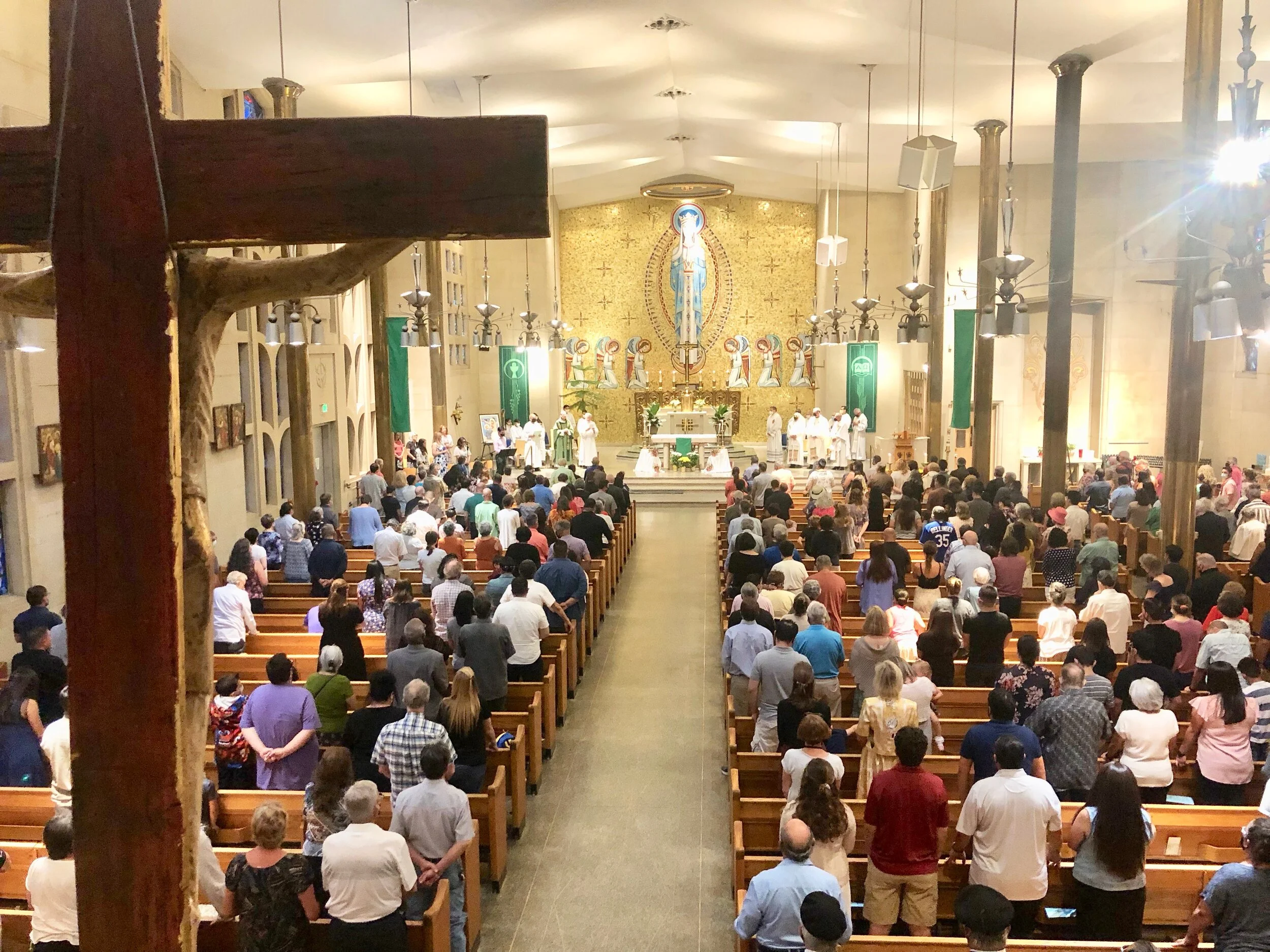
In the nearly ten years– I just realized it’s been ten years almost to the date– I’ve been attending Immaculate Conception Church, I’ve never been in the choir loft. While it’s usually not open, it was Sunday as the church held a farewell mass for the Jesuits who are leaving Albuquerque (and the church that they founded) after 154 years.
It was a different perspective than I’ve ever had and one I’m grateful for as we start a new journey this week with new priests and a new vibe.
I was not happy, although I understood, when I found out a year ago we’d be losing the Jesuits. Ten years ago, someone in my life suggested I find the Jesuit church here, believing I would like spirituality that comes with the order. I learned a lot in these ten years, not just about Jesuits, but about myself, and I can see how my own spirituality has grown. My life has also changed in some major ways in ten years– the end of a marriage, the death of my mom, a new marriage, a huge shift in my professional life, and the list goes on.
I knew that some point Fr. Warren Broussard, our pastor and the priest who married us would leave, but I didn’t expect to lose all the priests and their Jesuitism as I’ll call it. I spent the past year fighting my head, wanting to walk away from the social media that I do for the church with the pandemic brewing around us. I wasn’t even sure the church would survive when the building and land could be sold, especially with not enough priests go to around (Fr. Broussard put a squash on my thinking that at dinner here at my house about five weeks ago though).
But if we left the church where we were married, the church that I have spent so much time talking to God, feeling Our Lady of Guadalupe with me, hearing the messages I need to go forward in my life, where we would go? I had options, but nothing felt right.
Fr. Gene and I discussed it at my spiritual direction meetings with him at the Norbertine Monastery. It was a virus loss for me and I wondered if the pandemic was telling me to make a change. Yet something inside me nagged not to do anything, to hold on until we found out who and what was next. Fr. Gene reminded me that I did need to get back to church when things opened up because “You can’t go it alone.”
I hung on and in June, when we found out who our new pastor would be and I met with him, learned more about the priests who would join him, I told Greg, “We’re staying. I feel good about the future.”
Many people yesterday at the farewell mass and reception told me of their sadness for the Jesuits leaving. I get it, but I also feel like I have processed it already, maybe because I put so much effort into letting go over the past year, that I am ready for what’s next.
After all, as I have lamented here about a conversation with Fr. Anthony some time ago about how sometimes God asks you to give up something for something better. It’s about giving up the swimming pool for the ocean. I can’t swim in the ocean well right now with my popping shoulder, but I know that I need to let go of that fear because God is saying, “I know it’s hard, but don’t be afraid because what’s ahead, if you choose to let go, will give you something greater than you can imagine from where you’re standing.”
Forgetting to Ask
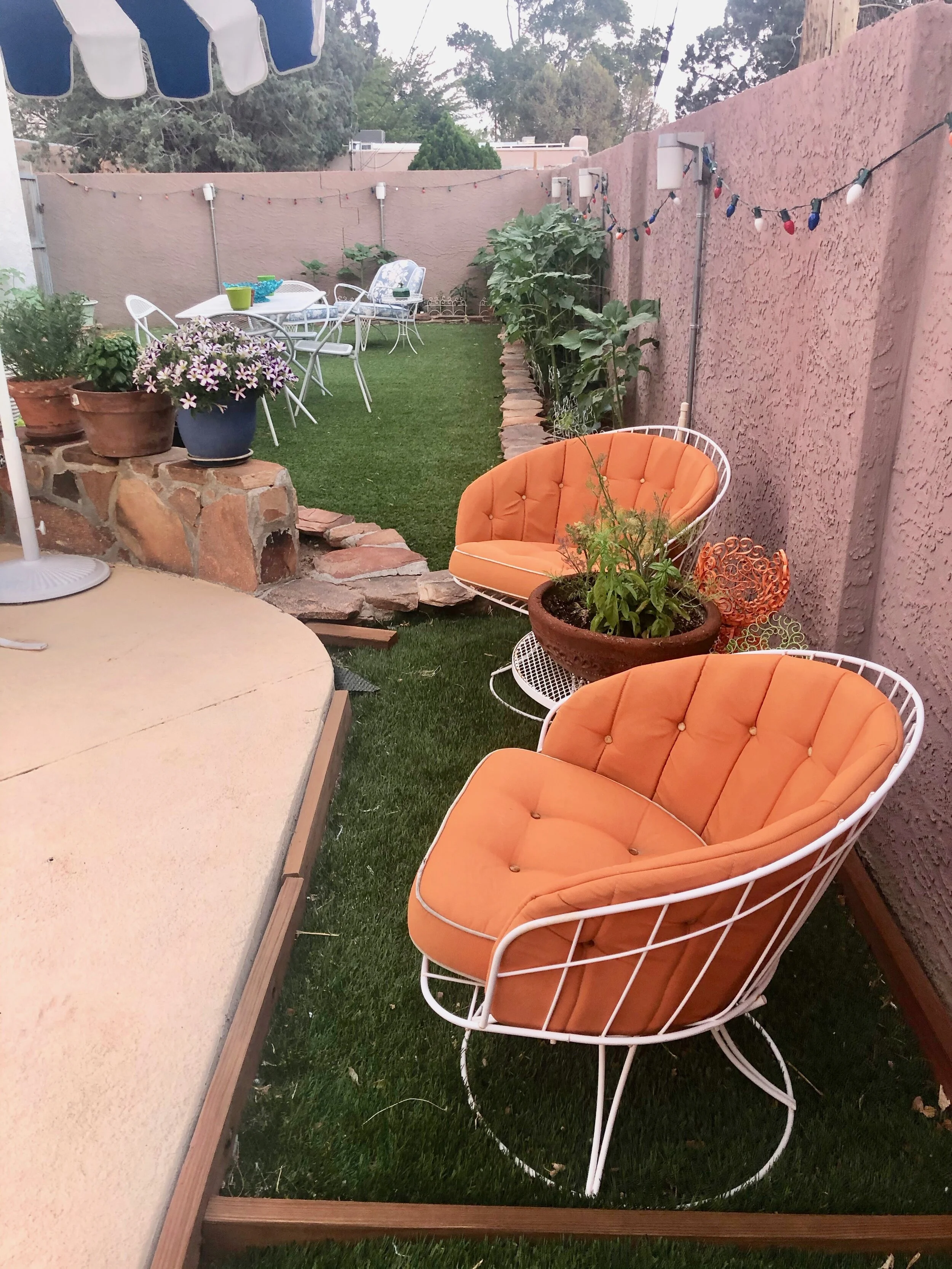
Sometimes I forget to ask for help.
I’m not talking about when I’m about to drop a large load of laundry in my arms and I don’t think to ask Greg to help me carry it. I’m referring to those times when I’m looking for something inspirational to post or I’m not sure what to do about a certain situation.
I’m sure I’ve heard it more than once, but I have a memory of attending daily mass and the priest asking why people are so afraid to ask for what they need. And that makes me wonder why I forget to ask for help so many times, especially in the kinds of situations where a little inspiration from the universe goes a long way.
Sometimes the inspiration comes, the words, the ideas, whatever it is, and maybe I have asked without realizing it, but there are times where I’m trying to figure something out and the answers just don’t come to me. It’s then that I forget to ask.
Some years ago, my mom and I were talking about something– I was working on a project and wasn’t sure how to do it (I wish I could remember what it was because it would make this post a lot more interesting to read) and suggested I ask my friend Bonnie who had died several years before that. And when we couldn’t find Mom’s mother’s wedding dress, we talked about how we should ask Grandma (who also had died) where it was.
There are so many times where we need just a little help to find something, to get us past our fear of doing something, when we need a sprinkle of inspiration. We should ask for help then, too. Often, we seem to think we should only turn to God for the major challenges in life, but I believe the more we ask for help from him and our deceased loved ones, the more we’re easing our own road here in this life because we’re learning to let go of whatever is holding us back.
The Motel Connection
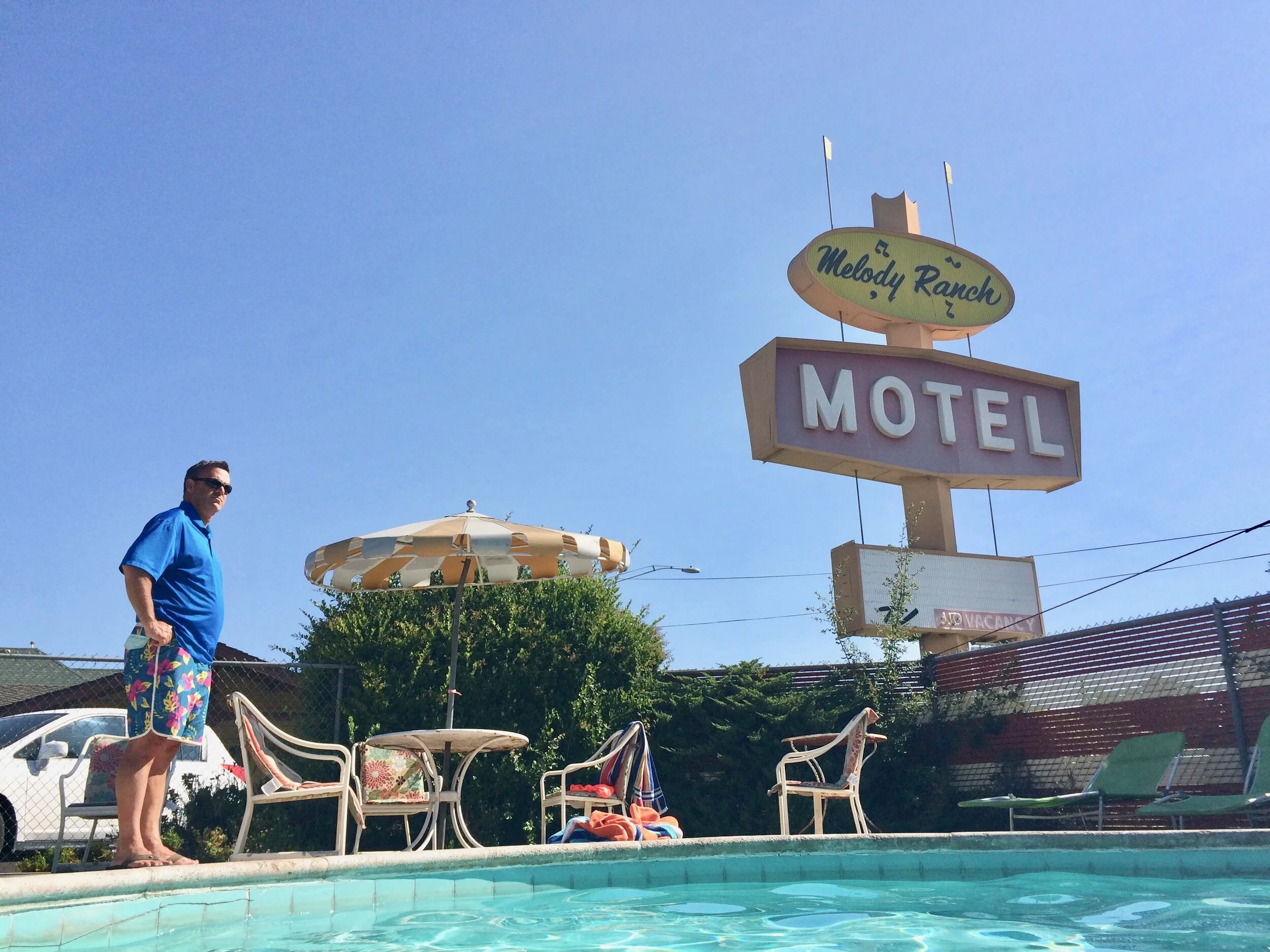
Greg says that if you take me to a motel with a “parking lot pool,” I’ll be happy. He’s pretty right on that.
I don’t know how it formed or where it came from, but my entire life I’ve had a fascination with motels and their pools. Growing up, we took a lot of vacations, mostly across the Eastern half of the United States (one vacation focused on touring Civil War battlefields), the six of us crammed into a 1977 silver Chevy Impala station wagon.
There was a big green Coleman cooler in the back and Denise and I spent our time in what someone coined “the back back” of the station wagon.
Our nights were spent at Holiday Inns (with a few Howard Johnsons sprinkled in there) and it was a family game to see who could spot the Holiday Inn sign first when we arrived at our exit.
These vacations would be the happy family memories that we would discuss when we ate out on Christmas Eve or other times we gathered around the kitchen table. My dad drank too much, his unhappiness poured into his beer mug, and my parents just generally weren’t happy in life or together.
But these trips, these stories about the various things that happened to us and the unique of each place we visited were Linn Family lore and happiness.
Perhaps that’s why I’ve taken my inspiration from the motels and wrapped it into so much of what I do today. A friend on Instagram said refreshed bathroom and guest room reflect that retro motel vibe. I know that I’m not trying to recreate my past with my family, but in some way I’m taking what was and making it part of my past and my future.
As summer officially begins in a week, here’s to the summer road trip!
The Tree
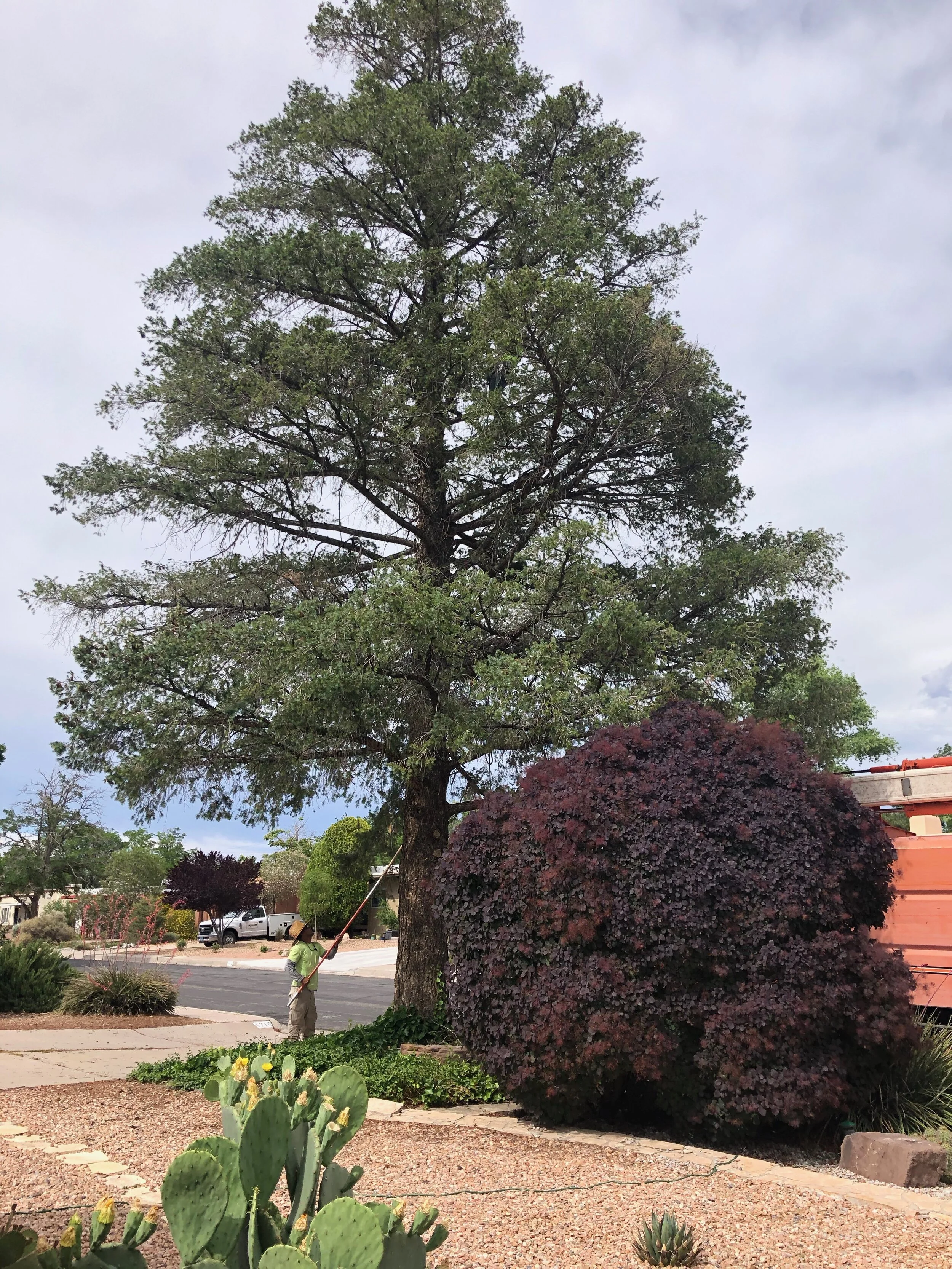
There is a giant spruce tree in my front yard, probably planted when the house was built in the 1950s. For some reason, I believe Iheard somewhere that you got a tree for your front yard as part of the house building deal.
When my first husband and I bought the house at the end of 2001, the front yard was the second thing we redid (after the kitchen floor and new appliances). With the help of our neighbor, the two tore out everything but the tree leaving us a clean slate to create something new. The grass had already been taken out and one of those awful fake river rock scene put in its place when we bought the house and we wanted to do something better.
My dad was very into trees. He planted a lot of trees at our house in Naperville which was great until the later years when my parents were raking endlessly in the fall. But he also seemed to keep up with the trees, trimming them periodically, and this was my failure.
The spruce hadn’t been trimmed since well before the divorce and I remember times when people would stop and look at the tree. I felt as if I were being judged, that I hadn’t taken care of the tree, that everyone had an opinion about the tree’s care.
But we decided a few weeks ago that we needed to have it trimmed, mostly because the pool guy told me that he was slated to open a pool that day and the customer called and told him not to come because the neighbor’s 50-foot tree had fallen into the pool and destroyed the cover. While my tree isn’t in danger of hitting my pool, it is in danger of hitting my house and I had fallen trees at my Naperville house more than once.
I worried that I had failed the tree. I hadn’t watered it enough, I hadn’t had it trimmed it enough.
But there was something else– I watched a neighbor a very long time ago have to have her tree taken down. The tree was in the front and she was crying in the backyard because she couldn't watch. The tree was a metaphor for her marriage that was ending.
Then I saw a tree across the street have to be removed and the sadness of my neighbor Joan (although I couldn’t tell her that the removal of the tree meant I had a better view of the mountains). They had built that house and I’m sure she had photos of her daughters growing up by the tree.
With everything that has happened in the last year or so, the idea of the losing the tree made me sad, but I was prepared that it might happen.
And it didn’t. It’s in good shape. It’s been trimmed. And my road ahead looks a bit clearer again.
Forward, forward, forward
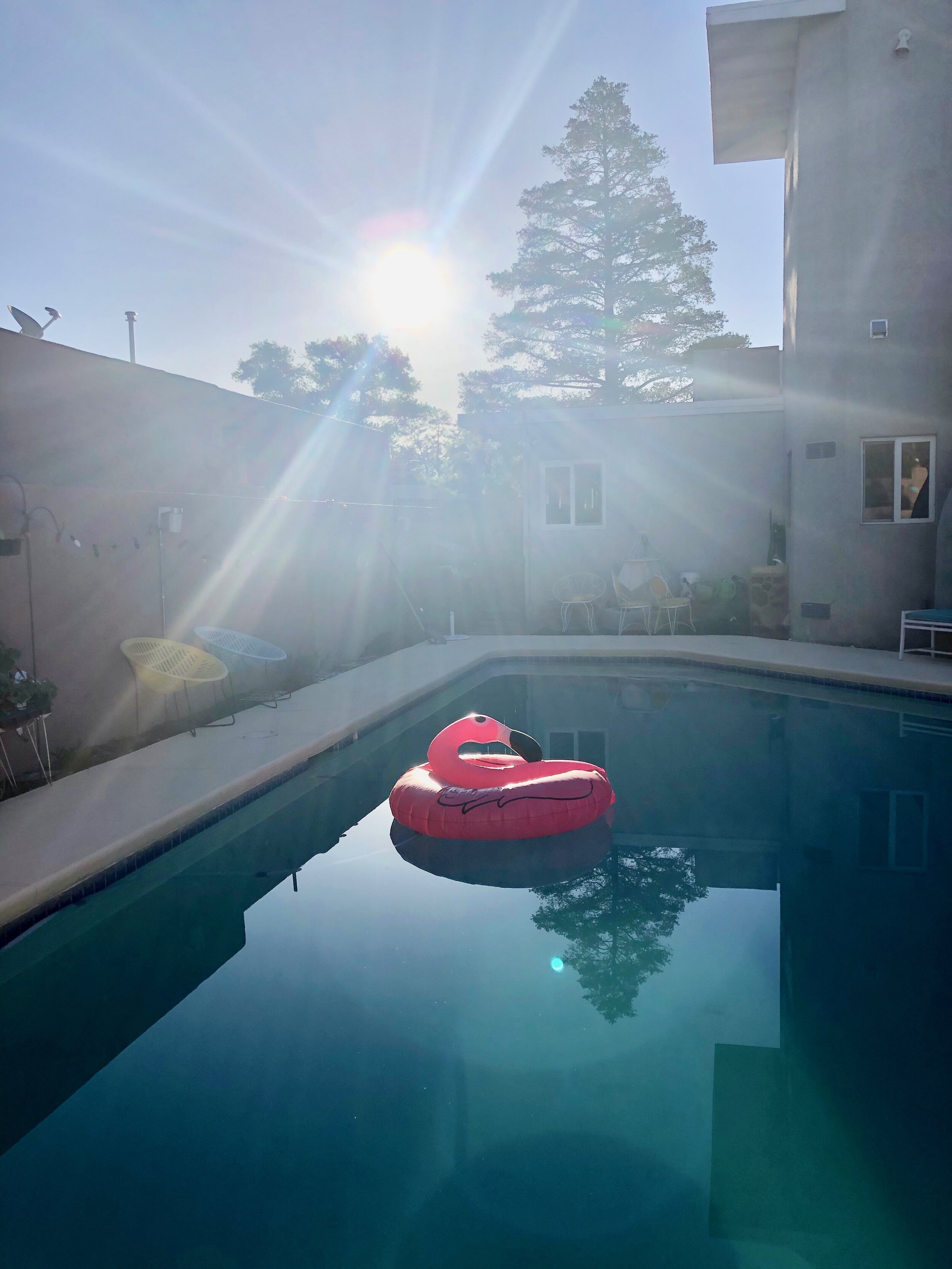
Don’t look back, I was often told when I was running competitively.
It was so easy to do– to look back and see how far (or near!) the next runner was behind me. Would I need to work harder to keep her at bay? Did I have the mental energy to keep up the pace, or even pick up the pace, so she didn’t pass me?
But looking back, even for a brief moment, took up not just physical energy, but time. It was that effort of the head movement that also lead to a partial body movement that slowed the running down and let that person get closer to me.
So they said not to look back.
Isn’t that true about life though, too?
Don’t look back or it will slow you down. Keep your eyes on the prize. Keep your eyes on your goals, your dreams, whatever it is that keeps you moving forward.
I was thinking about this as I was out running the other morning, finding myself looking back for no reason. I don’t know why I thought anyone was behind me (although when I run Ash, he looks back all the time, especially when we turn onto certain roads, for reasons I don’t understand). But as I did it, I thought about the effort it took to look back and the bit of time it cost me. For what?
I have always thought of the line from the Manfred Mann song, “Don’t look back/You’ve been there.”
After a year of what felt like standing in place, I’ve been trying to move forward so why would I look back? I do believe in occasional reflection of the past, after all, it’s that which reminds us of how far we have come. It might be that sometimes we need to stop for a moment, collect our thoughts, and take a quick look back to see where we have been to see how far we’ve come, but we don’t and shouldn’t do that all time.
Remember, will keep us from getting where we want to be.
A Color-Driven Life
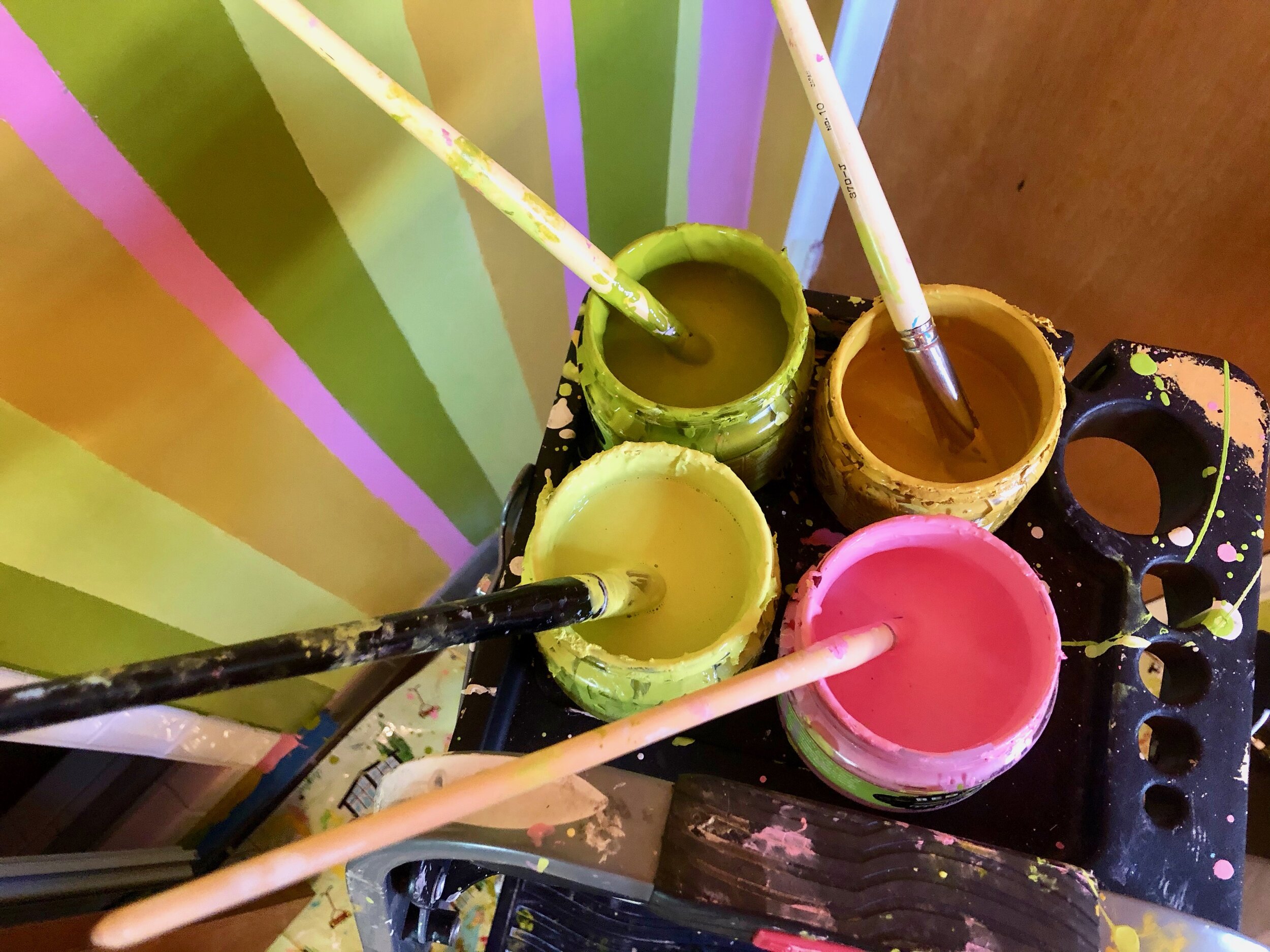
Some twenty or so years ago, my mom and I were walking through the now-defunct Mervyn’s department store at one of the malls here in Albuquerque.
“This is terrible,” Mom said. “It’s dead in here.”
That’s what she always said when color was lacking or lighting didn’t let the color come through– it was dead.
Mom included color wherever she could. There are multiple photos me wearing pink footy (as we called them– not Australian football) pajamas which were then passed onto Denise. Karen had a pink bedroom, mine was pink, Brian’s was blue. My parents had a gold bedroom. I’ve talked about the rainbow bathroom before.
She didn’t do color as loudly as the senior citizen woman I saw in Lowe’s recently wearing eighties fluorescent leggings with an equally fluorescent top, but she used enough color that you definitely wouldn’t call anything she wore dead.
Life is meant to be colorful, to be bright, to be sunny, especially because we’re often fighting challenges and darkness without ourselves and our worlds.
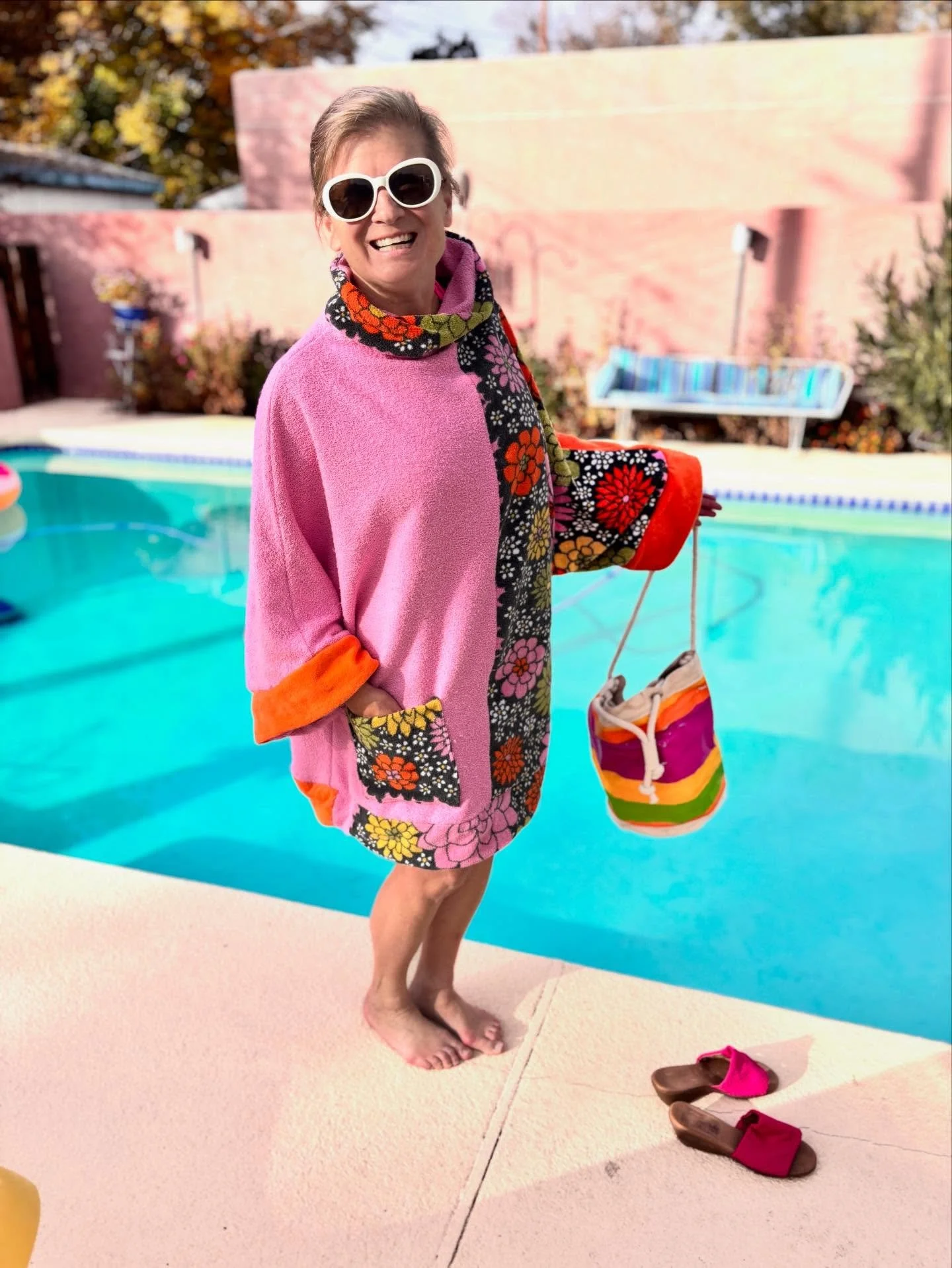
Which is why I choose to wear color, to decorate with color, and encourage everyone to include color wherever they can. We can't ever get enough of the good vibe it makes us feel.